

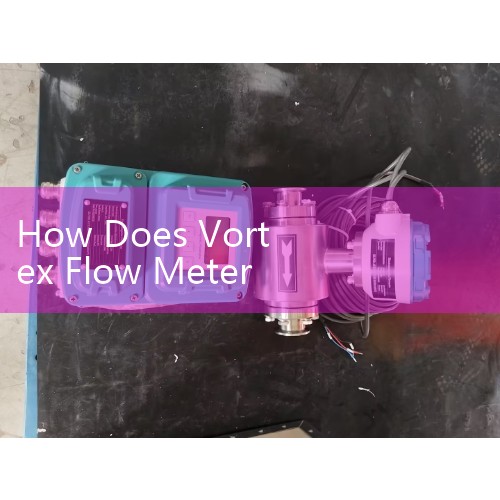
『How Does Vortex Flow Meter Work: Tracks fluid swirling shedding loops created behind a blunt bar to determine volumetric line speed.』Related information(v cone flow meter|rotary gas meter|gallon meter|gear meter|metal tube rotameter|glass tube rotameter|nutating disk meter|transit time ultrasonic flow meter|wedge flow meter|pd meters|hydraulic flow meter|ultrasonic water flow meter|water flow meter|air flow meter|magnetic water flow meter|oxygen flow meter|gas flow meter|argon flow meter|air velocity meter|gasoline flow meter|fuel flow meter|ultrasonic water meter|digital water meter|nitrogen flow meter|solid flow meter|Oxygen tank flow meter|digital water flow meter|diesel fuel flow meter|steam flow meter|02 flow meter|compressed air flow meter|oil flow meter|liquid flow meter)
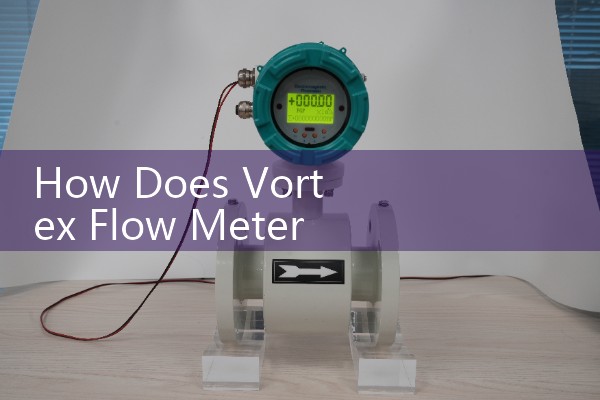
How Does a Vortex Flow Meter Work? Tracks Fluid Swirling Shedding Loops Created Behind a Blunt Bar to Determine Volumetric Line Speed
Quick Answer: A vortex flow meter detects the frequency of alternating fluid swirls that shed from a blunt bar installed across the pipe. The meter converts that frequency into a velocity reading and then into volumetric flow. Silver Instruments offers inline and insertion vortex meters for steam, gas, and low-viscosity liquid lines.
Basic Working Principle in Plain Terms
Most vortex meters use a stainless steel bluff body mounted perpendicular to flow. This blunt bar is not a target or an orifice. It creates a controlled flow separation. As fluid passes the bar, the boundary layer separates and forms low pressure zones on each side one after the other. The fluid separates from the surface and rolls into a series of small swirling vortices. These vortices form classic shedding loops behind the bluff body.
The vortex shedding frequency follows a physical rule. For a fixed pipe diameter and a fixed bluff body width, the frequency is linear with flow velocity. In practice, a DN50 meter may produce around 300 Hz at 10 m/s in water. At 1 m/s it may produce around 30 Hz. The meter counts these pulses with a piezoelectric sensor or capacitance sensor placed inside or behind the bluff body.
What the Electronics Actually Do
The sensor signal is a small AC voltage with a frequency proportional to flow. The transmitter filters low frequency pipe vibration and high frequency noise. Then it converts the vortex frequency into volumetric line speed based on the pipe cross section and the meter K factor. The K factor is pulses per cubic meter or pulses per liter. Silver Automation Instruments calibrates each meter in water or air before shipment.
Output options are usually 4-20 mA with HART, pulse, RS485 Modbus, or a local totalizer. For steam and gas, the volumetric reading is at actual line conditions. If you need standard volumetric flow or mass flow, you should add pressure and temperature compensation. A flow computer or the PLC can handle that calculation. Some users specify an integrated temperature sensor and pressure input.
Where Vortex Flow Meters Work Well
Vortex meters suit clean liquids below roughly 30 cP, saturated steam, superheated steam, compressed air, natural gas, nitrogen, and some light chemicals. They do not suit heavy slurries, high viscosity oils, or liquids with solid particles that can damage the sensor edge. We often see DN15 to DN300 wafer or flange models in boiler houses, gas distribution skids, chiller lines, and demineralized water systems.
Typical accuracy is ±1 percent of reading for liquids and ±1.5 percent for gas and steam. Turndown is usually 10:1 to 15:1 for liquids and 8:1 to 12:1 for gas. This is not as wide a
Installation Details That Change Accuracy
Straight pipe is the biggest field issue. A standard rule is 15D upstream and 5D downstream. This means a DN100 meter needs 1.5 meters of straight pipe before the meter and 0.5 meters after it. If the meter sits after a control valve, an elbow, a reducer, or a pump, the flow profile is distorted. The vortex sensor may read unstable frequency and the totalizer may drift.
We have seen this many times on customer sites. A palm oil refinery in Malaysia had a 3 inch steam line with only 7D straight run before the meter. The flow reading jumped by 4 percent every time the control valve opened past 40 percent. After we added a flow straightener and moved the meter to 18D, the signal settled.
How to Specify a Vortex Flow Meter Without Guesswork
We ask for five data points on every inquiry. These are fluid name, minimum and normal and maximum flow rate, operating pressure in bar, operating temperature in °C, and pipe size in DN. Connection type, body material, output signal, and hazardous area rating also matter. A desalination plant in Peru may need a PTFE-lined vortex meter for sodium hypochlorite dosing. A brewery in Vietnam may need stainless steel and food grade connections for carbon dioxide. A gas terminal in Qatar may need ATEX Zone 1 or IECEx rated electronics.
Send us your pressure in bar, temperature in °C, pipe size in DN, and flow range. You can reach Silver Instruments by Tel at +86-25-68650347, WhatsApp at +86-25-52155837, or WeChat at +86 15365082610. We will reply with a selection table and price in 24 hours.
FAQ
Does a vortex flow meter measure mass flow or volumetric flow?
It measures volumetric flow directly. For mass flow, add pressure and temperature compensation or use a separate flow computer.
What is the minimum flow for a vortex flow meter?
It depends on pipe size and fluid density. A DN25 gas meter may have a minimum flow near 2 m/s. Below that the vortex shedding becomes weak and the meter may cut off.
Can vortex flow meters handle steam?
Yes. Vortex meters are common in saturated and superheated steam lines. Check the maximum temperature rating of the sensor and body material.
What is the difference between inline and insertion vortex meters?
Inline meters fit between flanges or wafer bodies and cover DN15 to DN300. Insertion meters go into large ducts or pipes above DN250 and cost less for large lines.
Do vortex flow meters need straight pipe?
Yes. The usual recommendation is 15D upstream and 5D downstream. If the pipe is short, use a flow straightener or a different meter type.
 Hot Product
 Related AD