

『Flow Meter Comparison Table Guide: Vortex vs Coriolis vs Magnetic vs Ultrasonic Specs』Related information(v cone flow meter|rotary gas meter|gallon meter|gear meter|metal tube rotameter|glass tube rotameter|nutating disk meter|transit time ultrasonic flow meter|wedge flow meter|pd meters|hydraulic flow meter|ultrasonic water flow meter|water flow meter|air flow meter|magnetic water flow meter|oxygen flow meter|gas flow meter|argon flow meter|air velocity meter|gasoline flow meter|fuel flow meter|ultrasonic water meter|digital water meter|nitrogen flow meter|solid flow meter|Oxygen tank flow meter|digital water flow meter|diesel fuel flow meter|steam flow meter|02 flow meter|compressed air flow meter|oil flow meter|liquid flow meter)
Flow Meter Comparison Table Guide: Vortex vs Coriolis vs Magnetic vs Ultrasonic Specs
Quick Answer
Silver Automation Instruments is a flow meter manufacturer and supplier in Nanjing, China. We stock vortex, Coriolis, magnetic, and ultrasonic flow meters. Choose Coriolis for mass flow, density, or custody transfer. Choose magnetic for conductive water and wastewater. Choose vortex for steam, saturated gas, and clean hydrocarbons. Choose ultrasonic for clamp-on jobs and large pipes where pipe cutting is not allowed.
Comparison Table: Key Specs at a Glance
| Spec | Vortex | Coriolis | Magnetic | Ultrasonic |
| Typical accuracy | ±0.5 to ±1.5 percent of reading | ±0.1 to ±0.2 percent of reading | ±0.2 to ±0.5 percent of reading | ±0.5 to ±1.5 percent of reading |
| Fluid requirement | Gas, steam, clean liquid | Gas or liquid, any conductivity | Conductive liquid above 5 µS/cm | Clean liquid with low solids |
| Common DN range | DN15 to DN300 | DN15 to DN200 | DN6 to DN2000 | DN25 to DN3000 |
| Process temperature | -40 to 350 °C | -50 to 200 °C | -10 to 120 °C liner dependent | -30 to 160 °C clamp-on |
| Best for | Steam boiler, gas flow, light chemicals | Custody transfer, chemical feed, fuel mass | Water, wastewater, brine, pulp | Large pipe retrofit, cooling water, leak check |
Vortex Flow Meter Specs
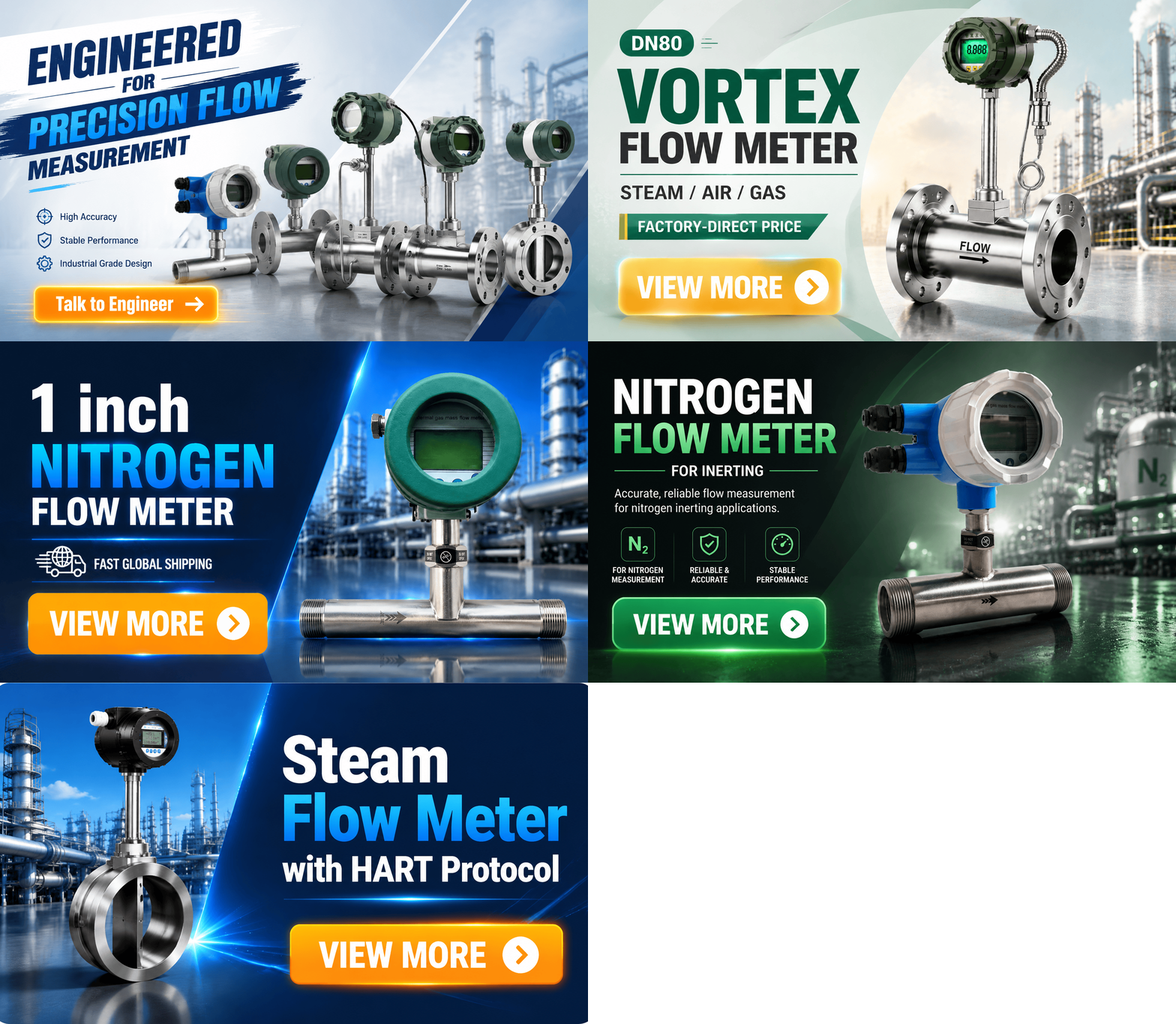
Vortex meters read flow by counting vortex shedding behind a bluff body. Silver Instruments VSF series covers DN15 to DN300 and works on steam, compressed air, natural gas, and clean low viscosity liquids. Accuracy sits around ±0.5 to ±1.5 percent of reading depending on media and Reynolds number. Typical media temperature range is -40 to 350 °C. Pressure rating goes up to 100 bar on special orders. You need a minimum straight pipe run of 15D upstream and 5D downstream in most installations.
A steam boiler in Thailand uses a VSF-DN80 with 4-20 mA HART output to track 0 to 2500 kg/h of saturated steam at 10 bar. Temperature compensation is built into the signal converter. Most engineers skip the compensation settings and then wonder why steam mass flow drifts. For gas flow in Indonesia, VSF-DN50 with temperature and pressure compensation gives corrected volumetric flow.
Coriolis Flow Meter Specs
Coriolis meters measure mass flow directly through vibrating tubes. The Silver Instruments CMF series spans DN15 to DN200 and handles liquid and gas. Accuracy is ±0.1 to ±0.2 percent of reading for liquid mass flow. Density output is standard and repeatability reaches ±0.0005 g/cm3. Wetted parts are 316L stainless steel. Hastelloy C is available for aggressive chemicals. Process temperature covers -50 to 200 °C. Viscosity up to 2,500,000 cP is not a problem because the meter measures mass not velocity.
We have seen this on customer sites many times. A paint manufacturer in Vietnam asked us for a mass flow meter on solvent dosing. The CMF-DN25 reports 0 to 2000 kg/h of solvent at 25 °C and 2 bar. The meter sends 4-20 mA HART to a PLC and Modbus RS485 to a paperless recorder. Because the process needed ATEX Zone 1, we supplied stainless steel cable glands and the correct certificate.
Magnetic Flow Meter Specs
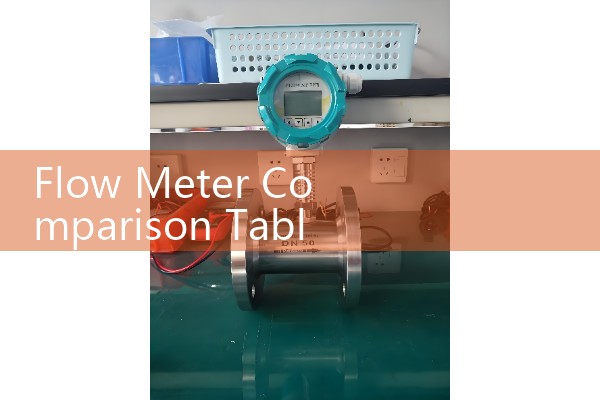
Magnetic flow meters work on Faraday law. They need a conductive liquid above 5 µS/cm, but in practice we recommend 20 µS/cm for stable reading. Silver Instruments EMF series covers DN6 to DN2000 with hard rubber, PTFE, or PFA liners. Electrodes come in 316L stainless steel, Hastelloy B, Hastelloy C, titanium, and tantalum. Accuracy is ±0.2 to ±0.5 percent of reading for liquids with solids. Process pressure goes to 40 bar and compact versions handle up to 150 °C.
A desalination plant in Oman uses an EMF-DN150 on brine reject at 3 bar and 30
Ultrasonic Flow Meter Specs
Ultrasonic flow meters include clamp-on and inline types. The Silver Instruments USF series covers DN25 to DN3000 for clamp-on and DN25 to DN1200 for inline. Accuracy for clamp-on is ±0.5 to ±1.5 percent of reading, depending on pipe material and flow profile. Inline models reach ±0.5 percent. Process temperature for clamp-on is -30 to 160 °C and can be extended to 250 °C with special transducers. This meter needs clean liquid with low solids and less than 3 percent gas bubbles.
In practice, the clamp-on meter saves time on large cooling water lines. A factory in Vietnam installed a USF-DN200 clamp-on in 45 minutes without pipe cutting. The pipe was carbon steel with 8 mm wall thickness. Signal quality was good because the water was clean and the pipe was full. For custody transfer, do not use a clamp-on meter. Use Coriolis or inline ultrasonic with multi-path transducers.
Application Fit and Model Pairs
Here is the thing. Most projects need a meter that fits the fluid and the cost target. For steam and boiler feed, vortex is often the first choice. For raw water, drinking water, and wastewater, magnetic meters win. For chemical mass flow, Coriolis is the default because output is mass not volume. For retrofit or large pipes, ultrasonic clamp-on avoids pipe shutdown.
Silver Instruments model pairs based on recent orders include the VSF-DN50 for natural gas at 5 bar and 0 to 400 Nm3/h, the CMF-DN25 for urea dosing at 0 to 1500 kg/h, the EMF-DN100 for treated water at 0 to 250 m3/h, and the USF-DN150 clamp-on for chilled water at 0 to 200 m3/h. A dairy plant in Chile received a CMF-DN25 for milk receiving at 0 to 8000 kg/h with 316L tubes, tri-clamp ends, 4-20 mA HART, Modbus RTU, and a calibration certificate.
Request a Spec and Price
Send us your pressure (bar), temperature (°C), pipe size (DN), and flow range. Tell us the fluid name, conductivity, viscosity, and required accuracy. We will recommend a meter with the right liner, electrodes, and process connection. Tel: +86-25-68650347. Whatsapp: +86-25-52155837. WeChat: +86 15365082610.
FAQ
Which flow meter is best for seawater desalination plant intake?
A magnetic flow meter works well for raw seawater and brine because seawater conductivity is usually above 50,000 µS/cm. Choose EMF-DN150 or larger with rubber liner and 316L electrodes. For high pressure reverse osmosis feed, confirm pressure rating and liner temperature limits.
Can a magnetic flow meter measure diesel or oil?
No. Diesel and oil are not conductive. Use a Coriolis mass flow meter or an oval gear flow meter for diesel. A Coriolis meter gives mass flow and density in one instrument.
What is the minimum straight pipe run for a vortex flow meter?
Use 15D upstream and 5D downstream as a general rule. For high accuracy on gas, use 20D upstream after a control valve. Silver Instruments can provide a flow conditioner if straight run is short.
Which flow meter works for steam flow measurement?
A vortex flow meter is the standard for saturated and superheated steam. It handles high temperature and gives volumetric flow with temperature compensation. For steam mass flow, pair it with a pressure transmitter or use a multi-variable vortex meter.
What is the price difference between Coriolis and magnetic flow meter?
Coriolis meters usually cost more than magnetic meters for the same DN size. A DN25 Coriolis meter may cost 2 to 3 times more than a DN25 magnetic meter. But Coriolis gives mass flow, density, and works on non-conductive liquids, so total process value can be better.
 Hot Product
 Related AD