

『Magnetic Flow Meter Calibration: Field Calibration Verification Methods』Related information(v cone flow meter|rotary gas meter|gallon meter|gear meter|metal tube rotameter|glass tube rotameter|nutating disk meter|transit time ultrasonic flow meter|wedge flow meter|pd meters|hydraulic flow meter|ultrasonic water flow meter|water flow meter|air flow meter|magnetic water flow meter|oxygen flow meter|gas flow meter|argon flow meter|air velocity meter|gasoline flow meter|fuel flow meter|ultrasonic water meter|digital water meter|nitrogen flow meter|solid flow meter|Oxygen tank flow meter|digital water flow meter|diesel fuel flow meter|steam flow meter|02 flow meter|compressed air flow meter|oil flow meter|liquid flow meter)
Magnetic Flow Meter Calibration: Field Calibration Verification Methods
Quick Answer: You can verify a magnetic flow meter on site without removing it from the pipe. Three practical methods dominate field checks: comparing the meter against a calibrated portable reference, performing a dry electrode and liner inspection, and running a converter simulation with a known signal source. These checks catch zero drift, coating buildup, or ground loop issues that eat into your batch accuracy.
Why Field Verification Matters for Electromagnetic Flow Meters
Most electromagnetic flow meters leave the factory with a wet calibration certificate traceable to ISO 17025. The certificate shows an accuracy of 0.2% or 0.3% of reading on a DN150 rig at 20 °C with clean water. But your real fluid in a plant in Indonesia or a wastewater station in Colombia is not clean water at 20 °C. Process temperature swings, electrode coatings, and stray voltages on old pipes change the meter behaviour. A factory calibration does not guarantee that the loop still reads correct after six months of dosing ferric chloride or after a pump upgrade that pushes flow velocity to 2.8 m/s instead of 1.5 m/s.
Silver Automation Instruments has supplied electromagnetic flow meters to a palm oil refinery in Malaysia and a desalination contractor in Oman. In both cases the end user asked the same question: “The display shows 52.3 m³/h, but my tank level drop suggests 55 m³/h. Which one do I trust?” Field verification answers that question without shutting down the line for a week to ship the meter back.
Portable Reference Meter Comparison
This is the most trusted method for larger pipe sizes from DN80 up to DN600. A clamp-on ultrasonic flow meter with a calibrated accuracy of 0.5% to 1.0% acts as the reference. You mount the transducers on a straight pipe section 10D upstream and 5D downstream of the magmeter. Both devices log flow for 15 to 30 minutes at stable flow. For a DN200 line running 120 m³/h, a deviation of more than 1.5% usually points to a liner issue, grounding problem, or electrode contamination. We have seen this on customer sites many times in brine transfer lines where a thin salt film builds up on the electrodes within a week.
Keep the 4-20 mA HART signal from the magnetic flow meter transmitter fed into a loop calibrator during the comparison. That way you confirm if the analog output matches the local display. A mismatch often comes from a wrong span setting in the PLC, not the meter itself. Silver Instruments transmitters default to 4 mA at zero flow and 20 mA at the full scale you set. Always cross-check that range before you suspect the sensor.
Dry Electrode and Liner Inspection
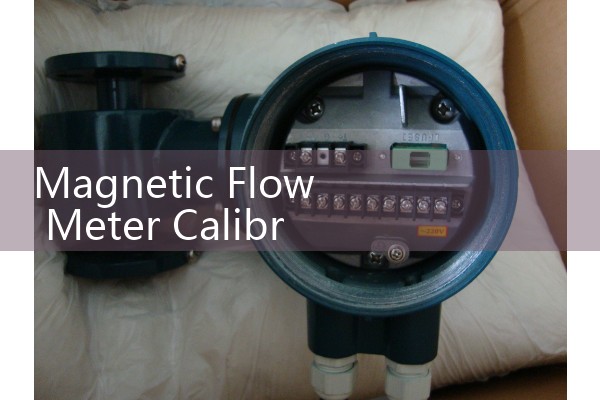
When you can drain the pipe, a visual inspection of the electrode tips and PTFE or hard rubber liner gives you direct evidence. An engineer at a dairy plant in New Zealand found a hairline crack in the PTFE liner of a DN25 meter only after the meter started drifting 4% low on whole milk at 3.5 cP. The crack let a small conductive path bypass the measurement zone. That level of detail never shows up in a remote diagnostic trace. Silver Instruments offers electrodes in 316L, Hastelloy C, titanium, and tantalum. Titanium electrodes hold up better in seawater and brine where 316L pits within months. If the electrode surface looks dull or pitted under a torch, the contact resistance has likely increased and the signal voltage dropped below the preamplifier noise floor.
Measure the resistance between the electrode terminal and a clean pipe ground. Values above 20 kΩ for a DN15 to DN50 meter with a standard converter front end will degrade the signal-to-noise ratio. On a new meter you typically see 2 kΩ to 8 kΩ with conductive fluids above 20 µS/cm. For low-conductivity media like demineralized water at 5 µS/cm, even a small film raises the noise floor fast.
Converter Simulation and Current Loop Check
Most modern electromagnetic flow meter converters, including the Silver Instruments S-MAG series, have a built-in simulation mode. The converter injects a known frequency that represents a specific flow rate. Run the simulation at 0%, 25%, 50%, 75%, and 100% of the set
Because electromagnetic flow meters depend on a stable zero, always run a zero check with the pipe full and flow at zero velocity. A 2 mm/s zero offset on a DN100 meter adds about 0.057 m³/h error that accumulates 1.36 m³ per day. In high-purity water systems where each cubic meter costs money, those small zeros matter. Our S-MAG converter lets you perform an automatic zero adjustment with the pipe full and the fluid at rest. Do this after the meter has been powered for 30 minutes so the coil temperature has stabilized.
When Accuracy Drifts: Common Causes in the Field
Before you adjust any calibration factor, rule out the installation basics. Check that the grounding rings are clean and that the upstream and downstream straight pipe conform to the lengths in the manual. A partially open butterfly valve directly upstream of a DN150 meter creates a velocity profile distortion that shifts the reading by 2% to 4%. In a recent case at a chemical plant in Thailand, swapping two bolts on a graphite gasket eliminated a 0.8% zero shift caused by a galvanic voltage between the flange and the pipe.
Temperature also matters. A PTFE liner on a compact meter in direct sunlight in Saudi Arabia can reach 70 °C on the outside while the process fluid stays at 30 °C. That gradient changes the coil resistance and introduces a span error. If your meter sees direct sun, shield it.
A Real-World Check from Our Support Team
A drinking water utility in coastal Kenya ran six DN300 magmeters on distribution mains. After two years, two meters showed a consistent 1.7% high reading versus the reservoir level trend. The team drained the pipes, pulled one electrode, and found a soft manganese deposit less than 0.3 mm thick. Cleaning with a dilute citric acid solution and a soft brush brought the meters back within 0.3% of the portable ultrasonic reference. The whole job took four hours per meter, including drain and refill time. No factory return needed.
Send Us Your Process Data for a Calibration Quote
If you need a field calibration support kit or a new electromagnetic flow meter with a traceable calibration certificate, write to Silver Automation Instruments. Tell us your pipe size (DN), fluid name, conductivity in µS/cm, operating temperature in °C, pressure in bar, and required accuracy. Email [email protected] or call Tel: +86-135-1213-1526. You can also reach us on WhatsApp: 86-135-12131526 or WeChat: +86 13512131526. We will propose a meter with the electrode material and liner that fits your process, not a generic spec.
FAQ
Can I verify a magnetic flow meter without a reference meter? Yes. You can run the converter simulation, check the electrode resistance, and perform a visual liner inspection. Combined, these checks catch many errors. A portable ultrasonic reference meter gives the highest confidence.
How often should I field-verify a magmeter on a custody transfer line? Most national metrology authorities require annual verification. For non-custody batching, a check every 12 to 24 months works for clean fluids. Abrasive slurries or hot bitumen may need checks every 3 to 6 months.
Does Silver Instruments offer ATEX-certified meters for Zone 1 gas environments? Yes. The S-MAG series includes Ex db eb IIC T6 Gb and Ex tb IIIC T80 °C Db certifications. You can request the ATEX certificate with your order.
What electrode material works best for seawater and brine? Titanium or Hastelloy C electrodes give long service life. 316L electrodes pit in warm seawater and are not recommended for continuous immersion above 15,000 ppm chlorides.
Can I replace only the converter if the sensor is still healthy? Absolutely. Silver Instruments converters pair with sensors from many manufacturers. Provide the coil resistance and electrode voltage factor from the old sensor, and we will pre-configure the converter at the factory.
 Hot Product
 Related AD