

『Vortex flowmeter』Related information(v cone flow meter|rotary gas meter|gallon meter|gear meter|metal tube rotameter|glass tube rotameter|nutating disk meter|transit time ultrasonic flow meter|wedge flow meter|pd meters|hydraulic flow meter|ultrasonic water flow meter|water flow meter|air flow meter|magnetic water flow meter|oxygen flow meter|gas flow meter|argon flow meter|air velocity meter|gasoline flow meter|fuel flow meter|ultrasonic water meter|digital water meter|nitrogen flow meter|solid flow meter|Oxygen tank flow meter|digital water flow meter|diesel fuel flow meter|steam flow meter|02 flow meter|compressed air flow meter|oil flow meter|liquid flow meter)

1. What is the difference between a vortex flowmeter and an electromagnetic flowmeter?
The difference between a vortex flowmeter and an electromagnetic flowmeter is as follows:
1. Measurement principle. Vortex flowmeter: It uses the phenomenon of vortex generated by the flow of the vortex vane with the fluid, and calculates the flow rate of the fluid by measuring the rotation frequency or speed of the vortex vane.
. Electromagnetic flowmeter: Using the principle of electromagnetic induction, it measures the electromotive force experienced by a conductive fluid flowing in a magnetic field, thereby measuring the flow rate of the fluid. From the perspective of the original pronunciation, the difference between the two is obvious.2. Structural form: Vortex flowmeter: composed of vortex generator, piezoelectric element, guide element and magnetic circuit part.
. The transmitter housing is made of steel plate or aluminum alloy plate by integral die-casting, and the body and sensor are combined into an integrated unit instrument. Electromagnetic flowmeter: composed of a conductive tube, excitation coil, housing, and electrodes, with secondary meters installed at the upper and lower ends of the electrodes.III. Vortex flowmeter: it is mainly used to measure the flow of liquid, steam and gas, but it is not applicable to viscous liquid, granular solid medium and liquid containing foam and bubbles. Electromagnetic flowmeter: suitable for measuring the flow rate of various conductive liquids, but cannot measure non-conductive media.
Fourth, output signal vortex flowmeter: usually outputs a standard current signal of 4-20mA.
. Electromagnetic flowmeter: outputting a linear signal propor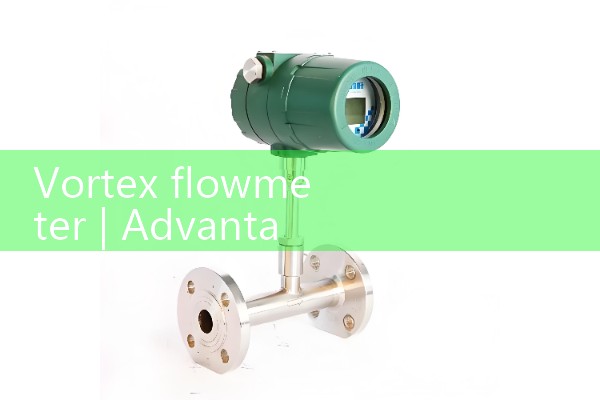
2. Will there be data fluctuations when using a vortex flowmeter to measure liquid flow during purging?
When using a vortex flowmeter to measure liquid flow during purging, there is a high probability that data fluctuations will occur. The amplitude and duration of the fluctuations are directly related to the purging pressure, gas-liquid mixing ratio, and flow field stability.
.1. Core reasons for fluctuations 1 Flow field is directly interfered: The measurement principle of vortex flowmeter is based on the linear relationship between vortex shedding frequency and flow velocity in a stable single-phase flow field. During blowing, high-speed airflow will destroy the original laminar or stable turbulent state of the liquid, forming a turbulent flow field in the vortex shedding area, resulting in irregular changes in vortex shedding frequency and directly outputting fluctuating flow data. 2. Mismatch of two-phase flow conditions: Compressed air is mixed into the process liquid during blowing, forming gas-liquid two-phase flow, while the calibration parameters of vortex flowmeter are only suitable for single-phase liquid conditions. The flow resistance and vortex generation conditions of two-phase flow are significantly different from those of single-phase liquid, and the flowmeter cannot accurat
 Hot Product
 Related AD