

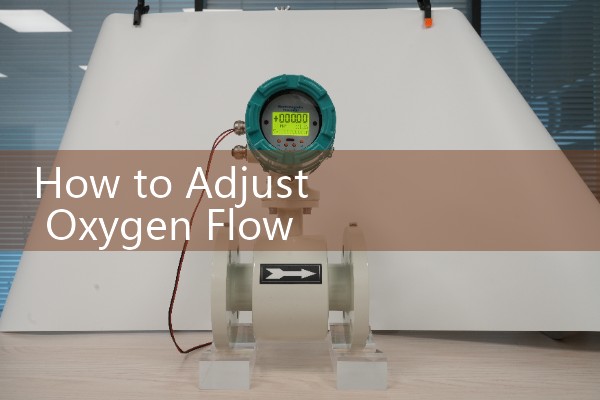
『How to Adjust Oxygen Flow Meter: Rotate the needle valve knob counterclockwise until the center of the float ball aligns with the desired liter mark.』Related information(v cone flow meter|rotary gas meter|gallon meter|gear meter|metal tube rotameter|glass tube rotameter|nutating disk meter|transit time ultrasonic flow meter|wedge flow meter|pd meters|hydraulic flow meter|ultrasonic water flow meter|water flow meter|air flow meter|magnetic water flow meter|oxygen flow meter|gas flow meter|argon flow meter|air velocity meter|gasoline flow meter|fuel flow meter|ultrasonic water meter|digital water meter|nitrogen flow meter|solid flow meter|Oxygen tank flow meter|digital water flow meter|diesel fuel flow meter|steam flow meter|02 flow meter|compressed air flow meter|oil flow meter|liquid flow meter)
How to Adjust an Oxygen Flow Meter: Needle Valve, Float Ball, and Liter Mark
Quick Answer: Rotate the needle valve knob counterclockwise until the center of the float ball aligns with the desired liter mark on the scale. Read the flow at the center of the float ball, not the top edge. Open the valve slowly to avoid float bounce.
Industrial oxygen flow meters are common in ozone generation, welding gas mixing, fish farm oxygen dosing, and chemical process lines. Most operators make one mistake. They read the top or bottom of the float ball. The correct reading point is the center of the ball or the widest part of a cylindrical float.
Why the Center of the Float Ball Controls Accuracy
A variable area flow meter for oxygen uses a float inside a tapered tube. As gas flow increases, the float rises. The tube scale is printed for a specific float shape and density. If you read the top edge, the reading can be off by 2 to 6 percent. On a 0 to 15 L/min glass tube rotameter with a stainless steel float, that is a difference of 0.3 to 0.9 L/min.
Silver Automation Instruments supplies oxygen flow meters with clear scale markings. The liter mark on the tube corresponds to the center of the float ball. This reading rule is standard for glass tube rotameters and metal tube rotameters with a cylindrical float.
Step by Step Oxygen Flow Meter Adjustment
Step 1. Check the inlet pressure. Most industrial oxygen rotameters work best at 0.1 to 0.5 MPa. Higher pressure changes the gas density and your flow reading will not match the calibration.
Step 2. Close the needle valve clockwise until it stops. Do not force the needle. The valve stem is fine pitched. Tightening too hard will score the seat.
Step 3. Open the oxygen supply from the upstream regulator. Keep the downstream line open to the process.
Step 4. Rotate the needle valve knob counterclockwise slowly. The float will start to rise. Stop when the center of the float ball aligns with the desired liter mark.
Step 5. Wait 10 to 15 seconds. The float can drift after the first set because downstream pressure changes. Make a small correction if needed.
In practice, most engineers skip the waiting step. We have seen this on customer sites in Vietnam and Indonesia. The result is usually an overshoot in flow after the process line reaches full pressure.
Oxygen Flow Meter Types and Typical Specifications
For panel mounting or local indication, a glass tube rotameter with a needle valve is the most common choice. Typical sizes are DN8, DN15, and DN25. Flow ranges include 0.5 to 5 L/min, 1 to 10 L/min, 2 to 20 L/min, and 5 to 50 L/min. Body materials can be 304 stainless steel or 316L stainless steel. Seals are usually PTFE or Viton. For oxygen service, PTFE is preferred because it does not react with oxygen.
For example, a 0 to 15 L/min oxygen flow meter with a local needle valve is often built on a DN8 glass tube rotameter body. For 2 to 20 L/min, a DN15 body with a 316L stainless steel valve gives better resolution. For 5 to 50 L/min, use DN25. Oxygen cleaning follows CGA G-4.1 or
For remote output, Silver Instruments offers metal tube rotameters with a 4-20 mA HART transmitter. The float position is measured by a magnetic sensor. The needle valve is still used for manual flow adjustment. This type works well in chemical plants and water treatment systems where operators need a signal to a PLC or SCADA.
Avoid These Oxygen Flow Meter Adjustment Mistakes
Mistake 1. Reading the top edge of the float ball. This underreports flow by a few percent. Use the center.
Mistake 2. Using a standard air rotameter for oxygen. Oxygen lines must be cleaned and free of oil and grease. A standard flow meter may have hydrocarbon lubricants on the O-rings. This is a fire risk.
Mistake 3. Opening the needle valve too fast. The float can slam into the top stop and break the tube or displace the float.
Mistake 4. Ignoring back pressure. If you adjust an oxygen flow meter with the outlet open to atmosphere, the reading will change when the process line builds pressure. Always adjust under real process conditions.
Industrial Applications Where Oxygen Flow Adjustment Matters
Ozone generators use oxygen at 5 to 30 L/min. A fish farm in Southeast Asia may dose oxygen at 2 to 10 L/min for aeration tanks. A glass bottle plant may use oxygen for combustion at 20 to 80 L/min. In each case, the needle valve setting is the main control loop for oxygen flow.
For larger pipe sizes or higher flow rates, do not use a small glass tube rotameter. Use a DN25 or DN40 metal tube rotameter with a dual valve configuration. The needle valve is set once and the process flow is monitored remotely.
FAQ
What is the correct reading point on an oxygen flow meter float ball?
Read the center of the float ball or the widest part of the float. The liter mark on the tube aligns with this point.
Why does the float ball bounce when I open the oxygen flow meter?
Bounce usually comes from inlet pressure fluctuation or a downstream flow restriction. Install a small pressure regulator upstream and open the needle valve slowly.
What flow range should I choose for a DN15 oxygen rotameter?
Common ranges are 1 to 10 L/min, 2 to 20 L/min, and 5 to 50 L/min. Choose a range where your normal flow sits between 30 and 70 percent of full scale.
Can I use a standard air flow meter for oxygen gas?
It is safer to order an oxygen-specific flow meter. Oxygen service requires oil-free and grease-free cleaning. Valves and O-rings must be compatible with oxygen.
Does Silver Automation Instruments supply oxygen flow meters with remote output?
Yes. We supply metal tube rotameters with 4-20 mA HART output and local needle valve adjustment. Send us your flow range, pressure, temperature, pipe size, and output requirement.
Contact Silver Automation Instruments for an oxygen flow meter quote. Tel: +86-25-68650347. WhatsApp: +86-25-52155837. WeChat: +86 15365082610. Send us your oxygen flow range in L/min, inlet pressure in bar, temperature in °C, pipe size in DN, and whether you need 4-20 mA output.
 Hot News
 Related AD