

『Thermal Mass Flow Meter for Liquids: Precision Low-Flow Boundary Layer Sizing』Related information(v cone flow meter|rotary gas meter|gallon meter|gear meter|metal tube rotameter|glass tube rotameter|nutating disk meter|transit time ultrasonic flow meter|wedge flow meter|pd meters|hydraulic flow meter|ultrasonic water flow meter|water flow meter|air flow meter|magnetic water flow meter|oxygen flow meter|gas flow meter|argon flow meter|air velocity meter|gasoline flow meter|fuel flow meter|ultrasonic water meter|digital water meter|nitrogen flow meter|solid flow meter|Oxygen tank flow meter|digital water flow meter|diesel fuel flow meter|steam flow meter|02 flow meter|compressed air flow meter|oil flow meter|liquid flow meter)
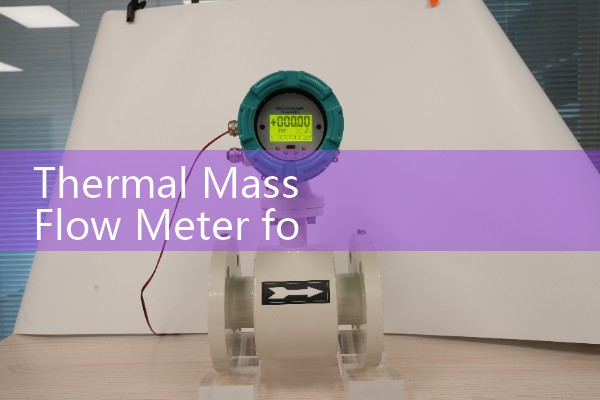
Thermal Mass Flow Meter for Liquids: Precision Low-Flow Boundary Layer Sizing
Quick Answer: For most liquid flow below 20 kg/h in pipes DN15 or smaller, a standard mass flow meter loses accuracy because the sensor sits inside a thick boundary layer. Silver Instruments sizes thermal mass flow meter for liquids by matching the sensor immersion depth to your actual low flow profile. Send us your pressure, temperature, pipe size and flow range for a quote.
Why Low Liquid Flow Demands a Different Sizing Approach
A thermal mass flow meter for liquids measures heat transfer from a heated sensor to the moving liquid. In higher flows, the flow profile is turbulent and the sensor sees a stable average velocity. In low flow service, the flow is often laminar. The boundary layer near the pipe wall can be 1 mm to 3 mm thick or more depending on viscosity, pipe diameter and flow rate.
We have seen many customer sites where a DN15 meter was selected only by flow range. The sensor tip stayed inside a slow moving boundary layer and the output noise was higher than the actual flow signal. This is not a sensor failure. This is a sizing mistake.
In practice, most engineers skip boundary layer calculations. Because they do not see the internal velocity profile, the meter looks correct on the bench but drifts in the field.
What Boundary Layer Sizing Actually Controls
Boundary layer sizing controls where the heated PT100 tip sits inside the pipe. For a DN15 thermal mass flow meter, the standard sensor protrusion can be 3 mm, 6 mm or 9 mm. If the fluid is water at 1 cP and flow is 5 kg/h, the boundary layer may be around 0.8 mm. A 6 mm protrusion is enough to reach the higher velocity core. If the fluid is a silicone oil at 20 cP, the boundary layer can be 2.5 mm at the same flow rate. A 6 mm protrusion still works but a 9 mm protrusion gives faster response and better repeatability.
For smaller lines like DN10, the pipe ID is only 10 mm. A long sensor tip can block a large part of the flow and create its own turbulence. So Silver Instruments selects the shortest insertion depth that still reaches beyond the calculated boundary layer. This keeps pressure drop low and signal clarity high.
This is the core of precision low flow boundary layer sizing. It is not a software correction. It is a hardware position decision made before the meter is built.
Parameters We Ask Before Sizing
We ask for six values before we quote a thermal mass flow meter for liquids: pressure, temperature, pipe size, flow range, viscosity and density. For most water-like liquids, viscosity is 1 cP and density is 1000 kg/m3. For solvents, viscosity can be 0.3 cP to 2 cP. For fuel oils or polymer melts, viscosity can be 5 cP to 500 cP.
Last year a customer in Vietnam needed to measure 0.2 to 1.5 kg/h of silicone oil at 30°C in a DN10 pipe. The first quote was based on water calibration data. The field error was 4.7 percent. After we changed the sensor depth and corrected the thermal conductivity tables for silicone oil, the error dropped to 0.8 percent of reading.
Because the thermal mass flow meter for liquids uses the thermal conductivity and heat capacity of the fluid, not just velocity, the sizing step must include these fluid properties.
Silver Instruments TMF-L Series Specifications
Silver Instruments supplies the TMF-L series thermal mass flow meter for liquids in DN10, DN15, DN25 and DN50 sizes. The standard flow range is 0.01 kg/h to 100 kg/h depending on the fluid and pipe size. Accuracy is plus or minus 0.5 percent of reading above 20 percent of the flow range. Below that, accuracy is plus or minus 1 percent of reading. Repeatability is plus or minus 0.2 percent. Response time is 1.5 seconds.
The sensor is made of 316L stainless steel with PTFE seals. The transmitter supports 4-20 mA HART and Modbus RTU. Power is 24 V DC. Pressure rating is 40 bar and temperature rating is 120°C. For hazardous areas, we provide ATEX Zone 1 and IECEx versions.
Process connections in
Applications We See in Your Regions
A chemical blending plant in Thailand replaced a Coriolis meter with a TMF-L because the Coriolis needed a zero check every week. They dose corrosion inhibitor at 0.05 to 0.5 kg/h into a reactor at 12 bar. The thermal mass flow meter holds zero for three months without manual intervention.
A biodiesel pilot plant in Malaysia measures 2 kg/h of catalyst at 60°C in a DN10 line. The boundary layer sizing was based on vegetable oil viscosity at that temperature, not room temperature. Output noise is less than 0.1 percent of range.
In Egypt, a food additive producer doses vitamin premix at 0.3 kg/h into a batch mixer. They use a DN15 meter with a 6 mm sensor protrusion and a 4-20 mA HART signal to the PLC.
An Australian mining site uses the same TMF-L series to dose flocculant at 0.8 kg/h for a water treatment pilot skid. The process water temperature changes from 5°C to 35°C and the meter maintains plus or minus 0.7 percent repeatability.
Installation Notes and Field Feedback
For a thermal mass flow meter for liquids, straight pipe is not optional. Use 10D upstream and 5D downstream for DN15 and smaller. Avoid mounting the sensor at the top of a horizontal pipe if the liquid can contain bubbles. Gas pockets will sit at the top and cause the sensor to read low. Mount the meter in a low point or use a back pressure valve to keep the liquid in a single phase.
Because many low flow dosing lines use a pulsing pump, install a small pulsation damper before the meter. A peristaltic pump at 3 strokes per second will make the output pulse. The TMF-L has a software damping filter that helps, but mechanical damping works better.
We have seen on customer sites many times where a meter was installed right after a gear pump without a straight run. The reading was stable in the workshop but oscillated in the field. The fix was not a different meter. The fix was adding 8D of straight pipe.
FAQ
Can a thermal mass flow meter measure all liquids?
No. A thermal mass flow meter for liquids works best with clean, single phase fluids without solids or heavy wax. It is not for slurries, high viscosity pastes or liquids with large bubbles.
What is the minimum flow rate for a thermal mass flow meter on water?
For DN10 and DN15, the TMF-L can measure 0.01 kg/h on water if the pipe stays full and the sensor immersion depth is set by boundary layer sizing. Below that, the heat transfer signal is too close to the zero drift.
How does boundary layer sizing affect accuracy?
If the sensor tip stays inside the slow moving boundary layer, the meter reads a lower heat transfer coefficient and the calibration curve flattens. This gives higher noise and poor repeatability at low flow. Correct sensor immersion depth places the tip in the higher velocity core.
What output options are available?
The standard transmitter has 4-20 mA HART and Modbus RTU. Pulse output and a local display are optional. For hazardous areas, ATEX Zone 1 and IECEx versions are available.
What is the lead time and price range for a low flow liquid thermal mass meter?
A standard TMF-L with G1/4 or 1/2 inch NPT connection ships in 7 to 10 working days. Price depends on size, connection and certifications. Send us your pressure, temperature, pipe size and flow range for a detailed quote.
Contact Silver Instruments for a Low Flow Thermal Mass Meter
If you need a thermal mass flow meter for liquids in a low flow dosing or injection line, send us your operating data. Include pressure in bar, temperature in Celsius, pipe size in DN, flow range in kg/h and fluid type. We will reply within one working day with a model, sensor immersion depth and price.
Tel: +86-135-1213-1526
Whatsapp: 86-135-12131526
WeChat: +86 13512131526
Website: flow-meter.com.au
 Hot News
 Related AD