

『Electromagnetic Flow Meter Types Compared: Insertion vs Full-Bore Models』Related information(v cone flow meter|rotary gas meter|gallon meter|gear meter|metal tube rotameter|glass tube rotameter|nutating disk meter|transit time ultrasonic flow meter|wedge flow meter|pd meters|hydraulic flow meter|ultrasonic water flow meter|water flow meter|air flow meter|magnetic water flow meter|oxygen flow meter|gas flow meter|argon flow meter|air velocity meter|gasoline flow meter|fuel flow meter|ultrasonic water meter|digital water meter|nitrogen flow meter|solid flow meter|Oxygen tank flow meter|digital water flow meter|diesel fuel flow meter|steam flow meter|02 flow meter|compressed air flow meter|oil flow meter|liquid flow meter)

Electromagnetic Flow Meter Types Compared: Insertion vs Full-Bore Models
Quick Answer: Full-bore electromagnetic flow meters offer better accuracy and repeatability for pipes from DN15 to DN600, while insertion magmeters cut costs by 50 to 70 percent on large lines from DN150 to DN3000. Choose a full-bore model when you need custody-transfer accuracy or low conductivity fluids. Choose an insertion model for retrofit jobs, large water pipes, and tighter budgets.
Most engineers compare two factors first: accuracy and installed cost. A full-bore magmeter has a liner and two electrodes inside a pipe section that matches the exact line size. An insertion magmeter has a sensor probe that goes into an existing pipe through a valve or saddle. Both measure flow by Faraday law, but the installation and maintenance paths are very different.
Full-Bore Electromagnetic Flow Meters: When Accuracy Is Not Negotiable
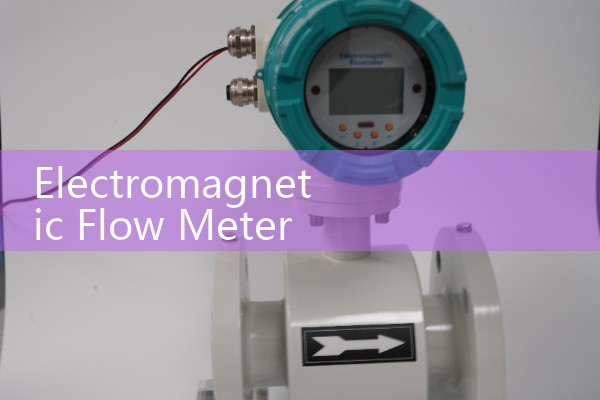
A full-bore electromagnetic flow meter is a spool piece with no moving parts. The internal diameter matches the pipe diameter. This keeps the flow profile stable. Typical accuracy is plus or minus 0.2 to 0.5 percent of reading. This level fits chemical injection, dosing systems, and food and beverage production where repeatability matters more than initial price.
Silver Automation Instruments supplies full-bore magmeters from DN15 to DN600 as standard. Larger sizes up to DN2000 are available on request. Common liner materials include PTFE, PFA, hard rubber, and polyurethane. Electrode options are 316L stainless steel, Hastelloy C, titanium, and tantalum. A paint manufacturer in Southeast Asia runs a DN25 full-bore meter on latex emulsion. The fluid conductivity is 600 µS/cm and the output goes to a PLC through 4-20 mA HART. This meter has worked for three years without liner failure.
Because a full-bore meter has a liner and a machined spool, the price climbs fast after DN300. That is the main reason plants switch to insertion magmeters for larger pipes.
Insertion Magmeters: Lower Cost on Large Pipes
Insertion electromagnetic flow meters work well for water and wastewater lines from DN150 to DN3000. You weld a fitting or install a hot tap valve on the existing pipe. The probe inserts to a depth of one eighth of the pipe inner diameter. Accuracy is typically plus or minus 0.5 to 1.0 percent of reading. That is enough for raw water intake, cooling water, irrigation, and desalination brine lines.
We have seen this on customer sites many times. A water utility in Vietnam needed to measure raw river water on a DN600 pipe. A full-bore meter would have required a shutdown and heavy lifting. Instead they installed a Silver Instruments insertion magmeter in half a day. Total cost was about 60 percent lower than a full-bore DN600 meter. The signal goes to a remote display with Modbus RTU and a 4-20 mA output.
Insertion meters need a minimum straight run upstream and downstream. In practice, 10 diameters upstream and 5 diameters downstream is enough for most water applications. Avoid installing the probe right after a butterfly valve or a pump outlet where swirl is strong.
Installation and Maintenance Trade-Offs
Full-bore meters require the line to be drained for installation and liner inspection. You can order a spool with flanges, tri-clamp connections, or wafer style ends. Process pressure ratings go from PN10 to PN40. Temperature rat
Insertion magmeters allow hot tap installation on pressurized pipes. This is a big advantage for water plants that cannot stop supply. Maintenance is also simple. You pull the probe out through the valve and clean the electrodes. For sludge or slurry, a ball valve purge port can help keep the probe clean.
Most engineers skip this part. The conductivity of the fluid must be above 5 µS/cm for both types. Demineralized water, oil, and some solvents have conductivity too low for a reliable electromagnetic measurement. For these fluids, Silver Instruments recommends a Coriolis mass flow meter or a thermal mass flow meter instead.
Recommended Models from Silver Instruments
Silver Automation Instruments offers full-bore and insertion electromagnetic flow meters for water, wastewater, chemicals, food, and marine applications. We are based in China and ship to Southeast Asia, Oceania, Latin America, Africa, and the Middle East. The factory handles DN15 to DN3000 sizes with standard accuracy statements and low lead times.
For a chemical dosing skid, a DN15 full-bore magmeter with PTFE liner and Hastelloy C electrodes works well. For a desalination plant feed line, a DN400 insertion magmeter with 316L electrodes and a hot tap valve saves time and budget. Both models support 4-20 mA HART, pulse output, and RS485 Modbus RTU. We can also add a local display with flow totalizer if your site requires local reading.
Send us your pressure in bar, temperature in degrees C, pipe size in DN, and flow range in m3/h. We will recommend one of the two types and send a quote within 24 hours. Contact Silver Instruments by phone at +86-25-68650347 or WhatsApp at +86-25-52155837. WeChat is +86 15365082610.
FAQ: Electromagnetic Flow Meter Types Compared
Which is more accurate, insertion or full-bore electromagnetic flow meter?
A full-bore magnetic flow meter is more accurate. Expect plus or minus 0.2 to 0.5 percent of reading. Insertion magmeters give plus or minus 0.5 to 1.0 percent of reading. The difference comes from flow profile disturbances and small sensor size.
Can an insertion magmeter be installed without shutting down the line?
Yes. Many insertion electromagnetic flow meters support hot tap installation. You weld a fitting, mount a valve, and insert the probe under pressure. This is common for water and wastewater pipes from DN200 to DN2000.
What is the minimum pipe size for an insertion electromagnetic flow meter?
In practice, DN150 is the minimum we recommend. Smaller pipes have unstable flow profiles for insertion probes. For DN15 to DN100, use a full-bore magmeter.
What fluid conductivity is required for a magnetic flow meter?
The fluid needs at least 5 µS/cm. Water, wastewater, acids, and many chemicals exceed this level. Deionized water, oil, and some solvents do not. Silver Instruments can help you test or verify the conductivity before you buy.
What is the price difference between insertion and full-bore electromagnetic flow meters?
For pipes DN300 and above, insertion magmeters often cost 50 to 70 percent less than full-bore models. Installation cost is lower too. The trade off is slightly lower accuracy and more sensitivity to flow profile.
 Hot Blog
 Related AD