

『Cement Flow Meter: Gravimetric Bulk Solids Conveyor System Senses』Related information(v cone flow meter|rotary gas meter|gallon meter|gear meter|metal tube rotameter|glass tube rotameter|nutating disk meter|transit time ultrasonic flow meter|wedge flow meter|pd meters|hydraulic flow meter|ultrasonic water flow meter|water flow meter|air flow meter|magnetic water flow meter|oxygen flow meter|gas flow meter|argon flow meter|air velocity meter|gasoline flow meter|fuel flow meter|ultrasonic water meter|digital water meter|nitrogen flow meter|solid flow meter|Oxygen tank flow meter|digital water flow meter|diesel fuel flow meter|steam flow meter|02 flow meter|compressed air flow meter|oil flow meter|liquid flow meter)

Cement Flow Meter: Gravimetric Bulk Solids Conveyor System Senses True Mass Flow
Quick Answer: A gravimetric bulk solids conveyor system senses live belt load and belt speed to calculate cement, clinker, or raw meal flow in tonnes per hour. Silver Automation Instruments supplies inline liquid, gas, and steam flow meters that support this dry solids signal for complete cement plant control.
Most cement plants already have a belt weigher on the kiln feed or raw mill feed. The gap is usually on the water, fuel, air, and additive lines. That is where a cement flow meter from our product range fits.
What the Gravimetric Bulk Solids Conveyor System Senses
Gravimetric bulk solids conveyor system sensing is based on two signals. Load cells under the weigh idler measure material load in kilograms per metre. A speed sensor on the tail pulley measures belt speed in metres per second. The controller multiplies these two values to give mass flow in kilograms per hour or tonnes per hour.
In a dry process cement plant, this signal controls the raw meal feed to the kiln. A typical kiln feed line may run at 120 to 180 tonnes per hour. The belt weigher output is often 4-20 mA HART or Modbus. This same principle appears at the cement mill discharge and the packing plant feed bin.
Here is the thing. The belt weigher is only accurate when the belt tension is stable, the idler alignment is correct, and the load cells are kept clean. Most engineers skip the zero calibration after a mill shutdown. We have seen this on customer sites many times. A zero drift of 0.5 percent can shift the raw meal feed by several tonnes per day.
Where Inline Flow Meters Complete the Cement Plant Mass Balance
A gravimetric bulk solids conveyor system senses dry powder. It does not measure water, fuel oil, natural gas, compressed air, or grinding aid. These streams need different meters.
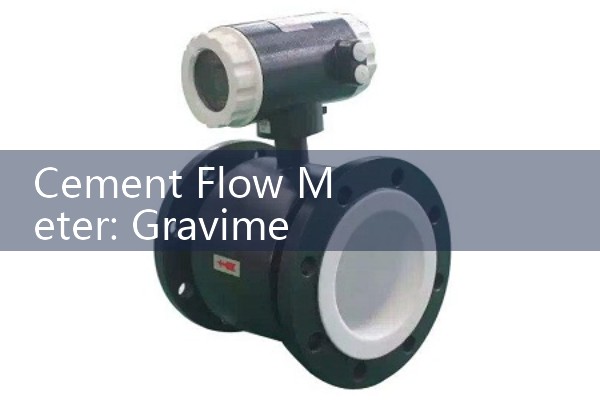
For cooling water and cement slurry water, we recommend an electromagnetic flow meter. Typical line size is DN25 to DN200. The meter has a PTFE liner and 316L electrodes. It outputs 4-20 mA HART. Accuracy is around 0.5 percent of reading for conductive liquid above 5 µS/cm.
For diesel, heavy fuel oil, and grinding aids, a Coriolis mass flow meter works well. It measures mass directly in kg/h. It also gives density and temperature. Typical accuracy is 0.2 percent of rate. Pipe sizes are DN10 to DN80. A kiln burner diesel line in a cement plant might run at 400 to 1600 kg/h at 8 bar and 60 °C.
For compressed air, waste heat gas, and natural gas, a thermal mass flow meter or vortex flow meter is suitable. Thermal meters measure mass flow directly at low velocities. Vortex meters handle steam and compressed air with a simple installation. A packing plant compressed air line may be DN40 and run at 0 to 250 m³/h.
Recommended Cement Flow Meter Pairings for Specific Lines
Raw mill water: electromagnetic flow meter, DN100, 0 to 80 m³/h, 4 bar, 25 °C, 4-20 mA HART. This line is often open discharge. An empty pipe electrode option helps avoid false readings.
Kiln main burner diesel: Coriolis mass flow meter, DN25, 0 to 2000 kg/h, 10 bar, 90 °C. Choose a meter with high temperature electronics if the meter is placed near the burner pipe.
Coal mill baghouse purge air: thermal mass flow meter, DN50, 0 to 300 Nm³/h, 6 bar, 40 °C. Thermal mass sensing gives direct mass flow without pressure compensation.
Packing plant compressed air: vortex flow meter, DN40, 0 to 200 m³/h, 7 bar, 30 °
Signal Outputs and Plant Integration
Most cement plants use a PLC or DCS. Our flow meters can output 4-20 mA HART, pulse, or RS485 Modbus RTU. The gravimetric bulk solids conveyor system often sends its signal to the same PLC. This allows the plant to compare dry solids feed rate with fuel flow and water flow on one screen.
Pressure transmitters also matter. Kiln inlet pressure, baghouse differential pressure, and cooling water pressure are common signals. A pressure transmitter with a ceramic or stainless steel sensor handles these jobs. Output options include 4-20 mA HART and Modbus. A paperless recorder can log the complete mass balance for shift reports.
Site Example from a Southeast Asian Cement Plant
Last year a customer in Vietnam asked us for a diesel flow meter on a kiln burner line. They gave us pipe size DN25, flow range 0 to 1800 kg/h, pressure 8 bar, and temperature 70 °C. We supplied a Coriolis mass flow meter with 4-20 mA HART output. The customer installed it after the fuel pump and before the burner control valve. The meter now gives the operator a live fuel mass flow signal. The same plant already had a gravimetric bulk solids conveyor system on the kiln feed. The two signals together show the exact fuel to feed ratio.
We have also supplied electromagnetic flow meters to a grinding station in the Philippines for cement mill water. The pipe size was DN80. Flow range was 0 to 40 m³/h. The meter used a compact design with a remote display. The plant maintenance team wanted a local display because the pipe was in a pit.
How to Request a Cement Flow Meter Quote
Send us your pressure in bar, temperature in °C, pipe size in DN, and flow range in kg/h or m³/h. If you are not sure about the flow range, send the pump capacity or compressor capacity. We will choose the correct meter size.
Contact Silver Automation Instruments at Tel: +86-135-1213-1526, Whatsapp: 86-135-12131526, WeChat: +86 13512131526. You can also visit flow-meter.com.au for product data sheets.
FAQ
What is the difference between a gravimetric bulk solids conveyor system and a cement flow meter?
A gravimetric bulk solids conveyor system senses dry cement or raw meal on a belt. A cement flow meter in a fluid line measures water, fuel, steam, or air. Both signals are needed for plant mass balance.
Which flow meter is best for cement slurry water?
An electromagnetic flow meter works for conductive slurry water. Use a PTFE liner and 316L electrodes. Size it by pipe DN and flow range. Avoid using a mechanical meter if the water contains cement particles.
Can you supply a meter for pulverized coal injection?
For pulverized coal as a dense phase flow, the measurement is difficult. A gravimetric bulk solids conveyor system on the coal feed path is the main reference. We can supply thermal mass flow meters for the conveying air and pressure transmitters for the line pressure.
What output signals do your meters support?
Most models support 4-20 mA HART, pulse, and RS485 Modbus RTU. Tell us your PLC or DCS input type. We can set the output in the factory before shipping.
Do you quote for projects outside Australia?
Yes. We supply customers in Southeast Asia, the Middle East, Latin America, and Africa. Send the application details and we will reply with a model, price, and lead time.
 Hot Blog
 Related AD