

『Bypass Flow Meter: Sourcing Differential Pressure Variable Orifice Fluid Probes』Related information(v cone flow meter|rotary gas meter|gallon meter|gear meter|metal tube rotameter|glass tube rotameter|nutating disk meter|transit time ultrasonic flow meter|wedge flow meter|pd meters|hydraulic flow meter|ultrasonic water flow meter|water flow meter|air flow meter|magnetic water flow meter|oxygen flow meter|gas flow meter|argon flow meter|air velocity meter|gasoline flow meter|fuel flow meter|ultrasonic water meter|digital water meter|nitrogen flow meter|solid flow meter|Oxygen tank flow meter|digital water flow meter|diesel fuel flow meter|steam flow meter|02 flow meter|compressed air flow meter|oil flow meter|liquid flow meter)
Bypass Flow Meter: Sourcing Differential Pressure Variable Orifice Fluid Probes
Quick Answer: A bypass flow meter using a differential pressure variable orifice fluid probe is a cost effective way to measure gas, steam, or clean liquid in large pipes from DN50 to DN1800. Silver Instruments supplies the DP transmitter, manifold, flow computer, and integration support for this setup. Send your pipe size DN, fluid type, pressure bar, temperature °C, and flow range kg/h or m3/h to get a quote.
What a Bypass Flow Meter Does in a Differential Pressure Setup
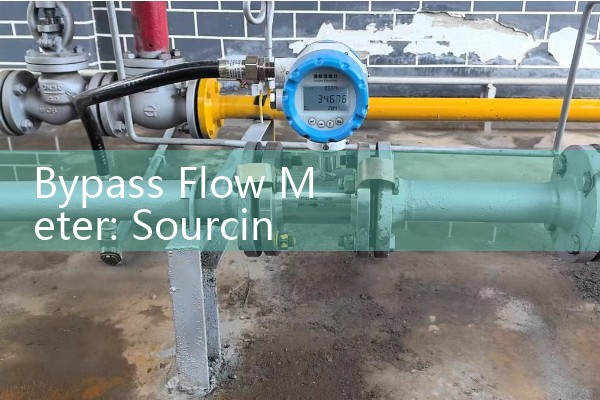
A bypass flow meter setup often uses a small DP transmitter connected to a probe inserted into the main pipe. The probe has multiple sensing ports across the pipe diameter. In practice, this gives an average velocity signal instead of a single point reading. You can install the probe through one tap point on a DN100 to DN1800 line. The DP transmitter then sends a 4-20 mA HART signal to the control room or local recorder.
Because the probe has a variable orifice shape, it creates a controlled differential pressure even at low flow. Most engineers skip the full orifice plate when they want lower permanent pressure loss or easier hot tap installation. Silver Instruments has seen this on customer sites many times. A water utility in Vietnam used a DN400 probe to monitor raw water feed to a treatment plant and avoided cutting a large plate assembly.
Variable Orifice Fluid Probes vs Traditional Orifice Plates
A traditional orifice plate works but it has higher permanent pressure loss. A variable orifice fluid probe reduces this loss and installs faster. The trade off is accuracy. Orifice plates can meet 0.5 percent uncertainty in some systems. A DP probe often runs 1.0 to 2.0 percent of reading or full scale depending on straight pipe length. For many utility gas lines, steam headers, and cooling water lines, that is enough.
Here is the thing: the DP transmitter matters as much as the probe. A cheap probe with a stable 4-20 mA HART transmitter often beats an expensive probe with a low cost transducer. We recommend a metal capacitance sensor or silicon sensor with square root output. Silver Instruments configures the DP range before shipping.
Key Details to Send for a Fast Bypass Flow Meter Quote
We need pipe size DN, pipe schedule or internal diameter mm, fluid name, pressure bar, temperature °C, and flow range kg/h or m3/h. If the area needs ATEX Zone 1 or Zone 2, state it early. For gas, include the molecular weight or density at operating conditions. For liquid, send viscosity cP and density kg/m3. For steam, send saturated or superheated pressure and temperature. If you need a magnetic flow meter alternative for water, include conductivity µS/cm.
Here is the thing: a missing pipe schedule delays quotes. Many requests from Australia and Latin America list DN100 but not the wall thickness. That changes the internal diameter and probe insertion length. We have seen 24 hour delays just from this detail. A gas distributor in Australia sent DN150 with schedule 40 and we quoted the same day. A chemical plant in Saudi Arabia sent only DN150 and we had to ask three follow up questions.
Bypass Flow Meter Accuracy and Rangeability
A variable orifice fluid probe with a good DP transmitter gives typical accuracy of 1.0 to 2.0 percent of reading or full scale depending on installation and straight pipe. Rangea
Do not use a DP probe on dirty or sticky fluids. The sensing ports can plug. For raw sludge, pulp stock, or heavy oil, use an insertion electromagnetic or positive displacement meter. Silver Instruments can cross check the application before you order.
Installation Notes Engineers Should Not Ignore
The probe must sit in a straight pipe section. Use 7 to 10 pipe diameters upstream and 3 to 5 pipe diameters downstream. In practice, a 90 degree elbow or control valve before the probe creates swirl. That ruins repeatability. For dirty gas, add a blowdown valve and filter. For liquid service, mount the DP transmitter below the pipe tap to keep the impulse lines full. For gas, mount the transmitter above the tap. Because condensation in gas lines causes a zero shift. Keep the transmitter ambient temperature between -40 °C and 85 °C. For ATEX Zone 1, specify EEx ia or EEx d protection.
Use a 3-valve manifold for zero checks. A 5-valve manifold helps with calibration. For steam, use a condensate pot on each impulse line. Do not forget the shutoff valves. Most field startup problems come from trapped gas in liquid lines or trapped liquid in gas lines.
Model Pairing with Silver Instruments Hardware
Silver Instruments supplies the pressure and DP hardware for a bypass flow meter job. Typical pairings include a 3051DP differential pressure transmitter with 4-20 mA HART, a stainless steel 3-valve manifold, and a paperless recorder for total flow. Temperature compensation uses a PT100 sensor. Some sites also need a pressure transmitter on the same line. We can supply both transmitters on one order. For remote monitoring, use a paperless recorder with RS485 or Ethernet. No separate flow computer is needed if the DP transmitter has square root output enabled.
Contact Silver Automation Instruments for a bypass flow meter quote. Tel: +86-135-1213-1526. WhatsApp: 86-135-12131526. WeChat: +86 13512131526. Send your pressure bar, temperature °C, pipe size DN, and flow range to get a detailed offer.
FAQ: Bypass Flow Meter and DP Variable Orifice Fluid Probes
What does a variable orifice fluid probe do? It creates a differential pressure signal from multiple sensing ports across the pipe. The DP transmitter converts this signal to 4-20 mA and a flow rate.
What pipe sizes suit a bypass flow meter with a DP probe? DN50 to DN1800 typical. Smaller than DN50 may use an inline orifice or Coriolis meter. Larger than DN1800 needs a custom probe length and insertion calculation.
How do I calibrate or range the DP transmitter? Send operating pressure, temperature, pipe internal diameter, and flow range. Silver Instruments sets the LRV and URV before shipping.
Can I use the bypass DP flow meter in hazardous areas? Yes. Specify ATEX Zone 1 or Zone 2, or IECEx. Use an intrinsic safety or explosion proof DP transmitter.
What is the lead time for a DP transmitter and probe assembly? Standard DP transmitter lead time is 5 to 10 working days. Custom probe length adds 3 to 5 days. Send pipe schedule and insertion length to confirm.
 Hot Blog
 Related AD