

『Flow meter plugin』Related information(v cone flow meter|rotary gas meter|gallon meter|gear meter|metal tube rotameter|glass tube rotameter|nutating disk meter|transit time ultrasonic flow meter|wedge flow meter|pd meters|hydraulic flow meter|ultrasonic water flow meter|water flow meter|air flow meter|magnetic water flow meter|oxygen flow meter|gas flow meter|argon flow meter|air velocity meter|gasoline flow meter|fuel flow meter|ultrasonic water meter|digital water meter|nitrogen flow meter|solid flow meter|Oxygen tank flow meter|digital water flow meter|diesel fuel flow meter|steam flow meter|02 flow meter|compressed air flow meter|oil flow meter|liquid flow meter)
1. What is a flow meter? A flow meter is a set of connected components used to provide a unique signal of the flow rate (or a quantity of fluid) in a pipeline, and this signal is not affected by installation or environment. The following is a detailed introduction to flow meters: Measurement purpose and signal characteristics: The main purpose of installing a flow meter is to obtain the measured value of the flow rate, usually presented in the form of an electrical signal, which has a specific extended uncertainty and is a definite value. In an ideal situation, the influence of the inlet and outlet pipelines as well as the working environment on this signal can be ignored. The measurement uncertainty is expressed as $y pm U $, where $U $is the uncertainty, which may be a specific value, such as $0.5% $, and it is necessary to clarify whether the value corresponds to flow rate, full-scale (FSD), or some combination (such as $pma $(measured) $pmb $(FSD)). At the same time, the range (such as $1 sim 20 m ^ 3/h $) should be given, and the confidence level including factor $k=2 $and approximately $95% $should be explained. If necessary, you can also indicate the certification body (domestic or international) of the calibration device. Related characteristic range: The related characteristic range of the flowmeter includes the flow range of the fluid (outside the calibration value), the maximum working pressure, the temperature range of the fluid, and the ambient temperature. These parameters are crucial for selecting and using appropriate flow meters, as different application scenarios may have different requirements for these parameters. Response parameters: There are two useful parameters for the response of flow meters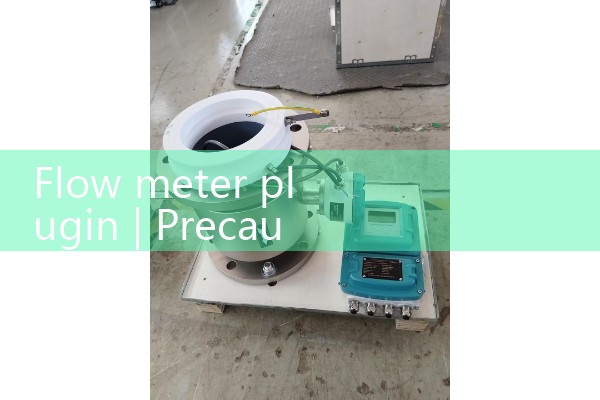
『SILVER Official Website SERVICE』
 Hot Blog
 Related AD