

 Current position > Product detail
『Micrometer Flow Meter: High-Accuracy Adjustable Needle Valve Tools』Related information(v cone flow meter|rotary gas meter|gallon meter|gear meter|metal tube rotameter|glass tube rotameter|nutating disk meter|transit time ultrasonic flow meter|wedge flow meter|pd meters|hydraulic flow meter|ultrasonic water flow meter|water flow meter|air flow meter|magnetic water flow meter|oxygen flow meter|gas flow meter|argon flow meter|air velocity meter|gasoline flow meter|fuel flow meter|ultrasonic water meter|digital water meter|nitrogen flow meter|solid flow meter|Oxygen tank flow meter|digital water flow meter|diesel fuel flow meter|steam flow meter|02 flow meter|compressed air flow meter|oil flow meter|liquid flow meter)
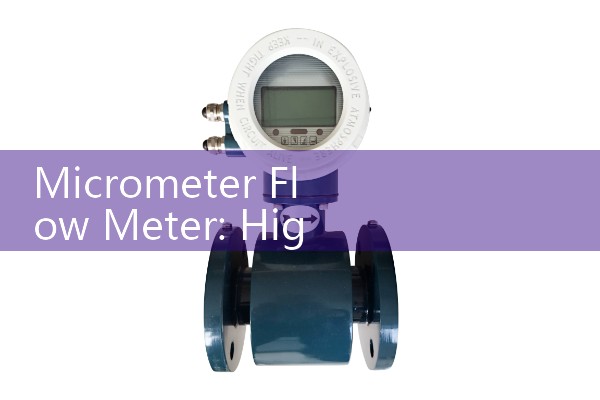
Micrometer Flow Meter: High-Accuracy Adjustable Needle Valve Tools
Quick Answer: A micrometer flow meter combines a precision adjustable needle valve with a direct-reading flow scale in one compact body. It gives stable gas or liquid flow control down to a few millilitres per minute. Most units handle inlet pressures up to 10 bar and deliver repeatability better than ±2% of full scale.
What Is a Micrometer Flow Meter and Why the Needle Valve Matters
A micrometer flow meter uses a tapered glass or metal tube with a float, just like a standard rotameter. The difference is the built‑in high‑resolution needle valve. The valve stem has a fine‑pitch thread and a graduated dial, often with 100 divisions per turn. One full turn might move the stem by only 0.5 mm. This lets an operator set flows repeatably at 0.1 mL/min increments without trial and error. Separate needle‑valve‑plus‑rotameter setups have more internal volume and more leak points. Integrating the valve shortens the flow path and reduces dead volume. That is why gas chromatography labs and pilot‑scale chemical reactors rely on these tools. The valve introduces almost zero hysteresis when the packing is PTFE or Kalrez. So the setpoint stays locked even after multiple open‑close cycles.
Key Specifications That Engineers Check
Standard ranges cover 0.2–2 mL/min for air and 0.5–5 mL/min for water. Larger bodies go up to 10 L/min air. Accuracy is typically ±2% of full scale for gas and ±1.6% for liquid. Wetted materials include 316L stainless steel, PTFE, borosilicate glass, and FFKM elastomers. Connections are mostly 1/8 inch NPT female or 1/4 inch NPT female. Some models come with compression fittings for 3 mm or 6 mm OD tubing. Maximum inlet pressure is 10 bar for stainless steel bodies and 5 bar for PTFE. Maximum temperature is usually 60 °C for PTFE and 100 °C for all‑metal units with a magnetic indicator. Most engineers look for a 10‑turn needle valve with a resettable digital counter. That detail alone can slash setup time during batch changeovers.
Where Micrometer Flow Meters Are Used Every Day
We see these meters in carrier gas control for gas chromatographs, in air sampling systems, and in trace oxygen analysis. A food testing laboratory in Brisbane replaced three separate rotameter‑and‑valve assemblies with our all‑PTFE micrometer flow meter. They now control nitrogen purge at 10 mL/min with one knob and no recalibrations for over one year. In a Middle Eastern petrochemical plant, a technician uses a stainless steel model to dose mercaptan odourant into LPG at flows around 50 mL/min. Because the dial scale shows actual mL/min gas at 1 atm and 20 °C, the operator does not need conversion charts. Other common spots include bioreactor oxygen sparging, catalyst test rigs, and flame photometer fuel supply. Corrosive fluids like 25% NaOH or dilute HCl run fine through the PTFE‑only versions.
Installation Tips From Field Experience
Always place a pressure regulator upstream of the meter.
How to Order a Micrometer Flow Meter From Silver Instruments
Silver Automation Instruments stocks both stainless steel and PTFE micrometer flow meter variants with factory‑installed needle valves. Tell us your medium (gas or liquid), full‑scale flow (mL/min or L/h), inlet pressure (bar), outlet pressure (bar), and process connection size. We will propose a model with the correct tube size and float material. Write to [email protected], call +86-135-1213-1526, or message us on WhatsApp at 86-135-12131526. We also offer ATEX Zone 2 compliant assemblies and full material certificates. Visit our product page at flow-meter.com.au for dimensional drawings and 3D step files.
Frequently Asked Questions
1. What is the difference between a micrometer flow meter and a rotameter with a separate needle valve? A micrometer flow meter integrates the needle valve into the flow meter body. This eliminates interconnecting tubing, reduces dead volume, and gives a single panel footprint. The valve dial reads in linear divisions, so you can return to a previous setpoint by dial number. A separate rotameter and valve offer more modularity but often show more zero‑point drift at very small flows.
2. Can I use a micrometer flow meter for liquids? Yes. PTFE‑lined or all‑PTFE models handle mild acids, alkalis, and deionized water. Stainless steel models work with solvents, fuels, and light lubricants. Always confirm chemical compatibility with our application engineers before ordering.
3. What is the typical repeatability? When inlet pressure is stable, most units repeat within ±0.5% of full scale. We measure this by dialling a setpoint, fully closing the valve, then returning to the same dial mark and recording the flow.
4. How do I stop the float from sticking? Install the meter vertically. For liquids, flush out all air. A small back‑pressure regulator on the outlet can dampen pulsations. Clean the glass tube with mild detergent if residue builds up.
5. Do you offer ATEX or hazardous‑area approval? We can supply ATEX Zone 2 certified micrometer flow meter assemblies for gas service. The valve is purely mechanical and does not need electrical certification, but the full instrument can come with ATEX compliance documents and EN 10204 type 3.1 material certificates.