

 Current position >About Us
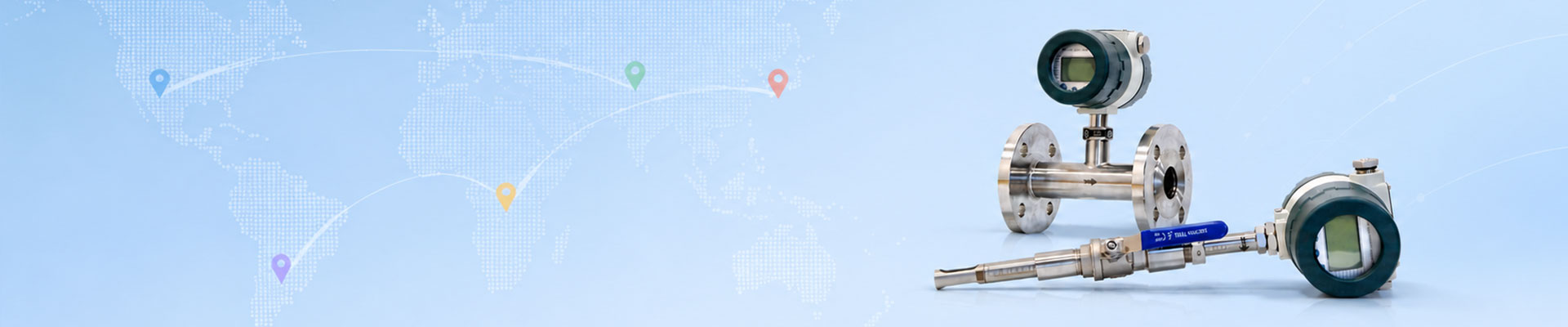
Digital Flow Meters: Electronic Smart Displays for Modern Process Automation
Practical Smart Display Flow Meters for Water, Oil, Gas, and Chemical Plants
Quick Answer: Digital flow meters with electronic smart displays give field operators a direct local reading plus a 4-20 mA HART output for PLC, DCS, or SCADA integration. Silver Automation Instruments supplies these meters for water, wastewater, oil, gas, chemical, and food plants in Southeast Asia, Oceania, Latin America, Africa, and the Middle East. Send your pipe size, flow range, fluid, pressure, and temperature for a specific quote.
Process automation does not stop at the control room. Field operators walk past pipelines, tanks, and utility lines during every shift. A digital flow meter with an electronic smart display gives those operators a direct flow reading without opening a laptop or waiting for a control room update. The same meter can send a 4-20 mA HART signal to the PLC. That combination is the main reason many plants now use digital display flow meters in place of older blind transmitters.
What Electronic Smart Displays Do on a Process Skid
An electronic smart display is not a simple totalizer. It shows instantaneous flow, accumulated flow, temperature, and sometimes conductivity or density depending on the meter type. For a Coriolis mass flow meter the display can switch between kg/h, lb/min, and total mass. For an electromagnetic flow meter the display can show flow rate in m3/h plus reverse flow alarms. Field operators use the display for daily checks, pump tuning, and batch control. Maintenance teams use the same display to verify that a meter is still within the expected zero point.
Here is the thing. A bright backlit display reduces field mistakes. Operators do not need to open a junction box or read a small indicator behind a pipe. The display usually includes push buttons or a magnetic keypad, so parameters can be changed without opening the housing. This matters in wet zones, dusty fertilizer plants, and offshore platforms. In practice, this local access speeds up startup and troubleshooting.
Match the Meter Type to the Fluid and the Signal
Not every digital flow meter fits every process. We always ask about fluid conductivity, viscosity, pressure, temperature, and pipe size before quoting. For conductive liquids like water, wastewater, acid, or caustic with conductivity above 5 µS/cm, an electromagnetic flow meter with a smart display is often the first choice. Sizes from DN15 to DN1200 cover most plant lines. For mass flow of oil, syrup, polymer, or liquefied gas, a Coriolis mass flow meter with a smart display gives direct mass flow and density data. For steam, compressed air, and some light gases, a vortex flow meter with a digital display handles high temperatures and line velocities. For diesel, fuel oil, and lubricating oil, an oval gear flow meter with a local display is simple and repeatable. For biogas or low-pressure air, a thermal mass flow meter gives direct mass flow at low velocities. For non-conductive liquids and large pipe runs, an ultrasonic flow meter with a smart display can be installed without cutting the pipe.
Most engineers skip this part because they are busy. But the signal type matters as much as the display. Many users ask for 4-20 mA HART because it carries both the process variable and the meter diagnostics. Some plants still use pulse output for totalizer panels. Others need RS485 Modbus for local SCADA. The electronic display on a modern flow meter can work with all three if the right output board is installed. We have seen this on customer sites many times: a plant replaces a blind transmitter with a smart display meter and the field team suddenly trusts the reading more.
Typical Applications in Your Region
In Southeast Asia, water treatment plants use digital electromagnetic flow meters for